 EXHALE TO EXCEL
E.X.H.A.L.E. Framework
School and classroom culture
 Partner With Us
 The Exhale To Excel System
Exhale To Excel integrates school culture, student development, and practical application to help schools create emotionally safe environments where students can focus, connect, and make thoughtful decisions.
Bring Exhale To Excel To Your SchoolWhy the Framework Exists
When schools address only the behavior they can see, they may miss the internal conditions shaping a student’s ability to participate, connect, and learn. Exhale To Excel helps schools build the emotional, relational, and regulatory capacity beneath behavior.
Complete System Overview
The three components work together and continuously reinforce one another. They connect the culture surrounding students, the developmental pathway students move through, and the practices that build usable regulation capacity.
School and classroom culture
Student learning and development
Practical capacity-building skills
Culture
E.X.H.A.L.E. establishes the relational and cultural conditions that make regulation-centered learning possible. It guides how adults and students enter the learning environment, communicate, build trust, and move toward shared growth.
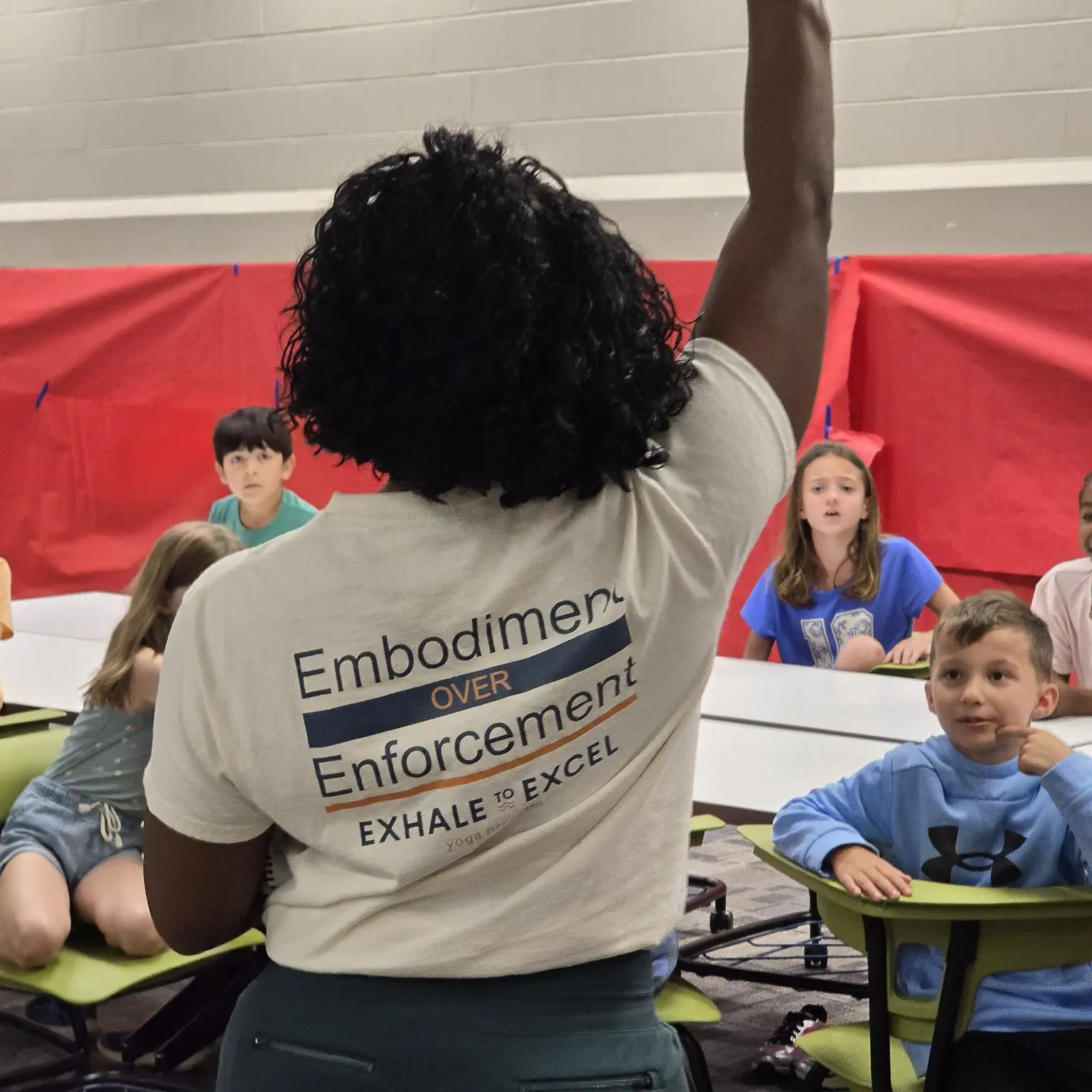
Capacity grows through practice, relationship, and embodied participation—not control alone.
Bring awareness, presence, and regulation into the learning environment.
Communicate emotions, experiences, and needs in safe and constructive ways.
Respect individual experiences, identities, needs, boundaries, and developmental differences.
Connect choices, values, expectations, and actions with the conditions needed for learning.
Strengthen relationships, belonging, co-regulation, and shared responsibility.
Apply growing emotional and regulatory capacity to learning, leadership, and thoughtful decision-making.
Development
The five-part pathway provides a developmental progression from internal awareness to intentional action. It is embedded throughout the Exhale To Excel curriculum rather than taught as an isolated activity.
Tap the visual to enlarge.
Notice internal and external cues, including emotions, body signals, triggers, needs, and what is happening in the moment.
→Pause to understand the experience, identify patterns, consider needs, and create space between what happened and what happens next.
→Use breath, movement, grounding, connection, or another supportive strategy to create greater stability and choice.
→Reconnect with self and others through empathy, communication, boundaries, accountability, and understanding.
→Choose a thoughtful, values-aligned action that supports dignity, relationships, and readiness to move forward.
The five-part pathway helps students build the capacity to notice, understand, stabilize, reconnect, and choose—not simply comply in the moment.
Practice
B.R.E.A.T.H. organizes the practical skills students and educators use to build emotional literacy, regulation, relational capacity, and readiness to learn. Explore Emotional Literacy & Regulation.
Notice physical sensations, energy, tension, breath patterns, and other body signals.
Use supportive strategies to shift activation, increase stability, and expand the ability to choose a response.
Identify, name, understand, and communicate emotions and needs.
Practice voice, choice, consent, personal limits, and respectful communication.
Pause, consider impact, evaluate options, and make values-aligned choices.
Build empathy, connection, accountability, repair, cooperation, and relational trust.
Students build awareness and practice tools before they are urgently needed.
Students use developmentally appropriate strategies to create stability, connection, and choice.
Students reflect, reconnect, restore accountability, and strengthen readiness for future situations.
The System in Practice
Scenario: A student becomes overwhelmed during independent work, stops participating, and begins to disengage.
The educator approaches with steadiness, protects the student’s dignity, uses invitation language, and creates space for regulation before demanding immediate compliance.
→The student is supported in recognizing body and emotional signals, reflecting on what is happening, regulating with an appropriate strategy, reconnecting with the educator or task, and choosing a next response.
→The student may use a brief breathing practice, movement, grounding, emotional naming, a needs check-in, or a supported communication strategy.
→The student returns to the learning process with greater stability, dignity, connection, and accountability.
How Schools Implement the Framework
Schools can engage Exhale To Excel through flexible implementation pathways designed to build student, educator, and system capacity.
Developmentally responsive emotional literacy and regulation learning supporting K–12 school communities.
Training that helps educators understand regulation, co-regulation, relational safety, and readiness to learn.
Support that strengthens educators’ personal regulation capacity and their ability to create regulation-centered learning environments.
Structured support for integrating the framework across classrooms, student services, leadership, and school culture.
Certification and curriculum-licensing pathways for professionals preparing to facilitate Exhale To Excel with fidelity.
Outcomes and Evidence